
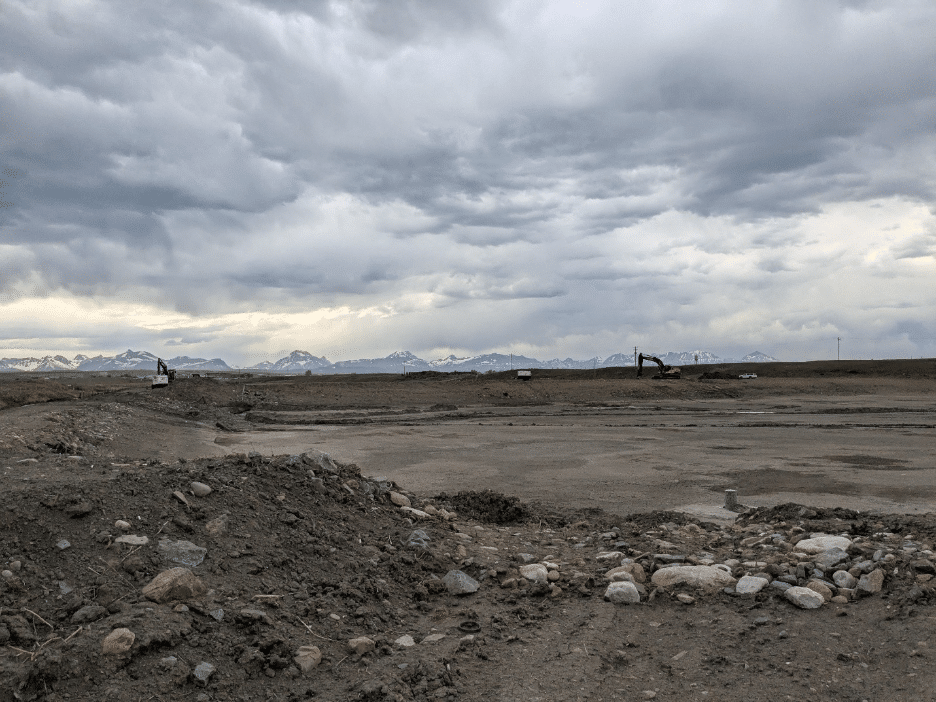
Photo credit: Tucker Colvin, SW EFC
Determining the Need
For water and wastewater utilities, the infrastructure funding process can have many steps. The first step is to determine that there is a need for an infrastructure project in the planning phase, beginning with an initial assessment that answers the following questions:
- What is the need for the project?
- What are the benefits of doing the project?
- What are the risks of not doing the project? To whom would they occur?
- Are there alternatives to an infrastructure approach to the problem (e.g., a non-asset solution, an operation and maintenance solution)?
- Does the proposed project address all the regulatory issues the system is facing? If not, why not?
- Are there other higher priority projects or assets that should be included or done instead?
- Should the project be phased in any way? If so, what should be the first phase?
The answers to these questions should be clear to elected leaders, funding agency personnel, and the general public. If these questions cannot be answered clearly and completely, further planning should be completed before continuing.
The assessment step can be done utilizing internal staff or it can involve the use of Technical Assistance (TA) providers, such as the Environmental Finance Center Network who provide free assistance, local councils of government, or professional consultants.
The most important part of the process is to take a detailed, data driven look at the potential need for an infrastructure project. Does the data support the need for the project, and can all the questions above be answered satisfactorily to have confidence moving forward?
If the answer is no, then further investigation may be required to gather more data or to reimagine the project. During the planning stage, a utility has the most influence over a project direction and scope, so this is where the decision to move forward or not should be made.
If the answer is yes, there is a need for an infrastructure project, the planning process can continue into the next phase: initial conceptual design. In many, but not all states, this is likely to be a Preliminary Engineering Report (PER) or a similar document. This PER or similar document will describe the necessary project and the various alternatives that could be used to address the project. This document is often part of the funding process for detailed design and construction dollars. While some funding sources can fund the entirety of a project from PER to detailed design to construction, many funding sources that will pay for detailed design and construction require planning to have already been completed. Even for funding sources that do not require planning, completing this step is critically important to understand the amount of funding required, provide clarity for the need for the project, and may help the chances of being awarded project funding.
Planning Grant Availability
Planning documents do cost money, which might be difficult for a small system to cover. There are funding sources at the state and federal level that can help fund these documents. Planning funds at the federal level include United States Department of Agriculture Rural Development (USDA RD) Water & Waste Disposal Predevelopment Planning Grants and Special Evaluation Assistance for Rural Communities and Households (SEARCH) Grants, and United States Army Corps of Engineers Planning Assistance to States. Because the USDA RD funds so many PERs, their PER template has been widely adopted as the standard template for many agencies. Other federal agencies have programs that may not be specifically for planning but can be used for planning, often depending on your community and the project details. This includes the US Economic Development Administration Public Works program. Additionally, each state and Tribe receives money from US Housing and Urban Development for Community Development Block Grants (CDBG). CDBG funds may be able to be used for planning, but these programs vary by state and can be very competitive and have limited funds.
Many states have their own state-level programs that will pay for planning. To see what planning grants are available in your state, the Environmental Finance Center Network has compiled funding sources for states, territories, and Tribal Nations. States may fund programs through their state legislatures at points in time that can pay for infrastructure projects or planning of these projects.
The last way to get planning completed for your project is to apply for assistance with document preparation or planning processes with Technical Assistance Providers (TA), such as the Southwest EFC. TA providers may have some limited resources that can assist systems with free engineering help, such as PERs, engineering evaluations, and reviews. It is worthwhile checking to see if any of this type of help may be available. In the past, the Environmental Protection Agency (EPA) RealWaterTA program has contracted with engineers to provide free engineering services. Currently this program is not active, but it may be active again in the future. Some state level programs are also starting to take this approach, such as New Mexico Finance Authority Technical Assistance Program. Programs like these can be very helpful to utilities that have difficulty paying up front for engineering services.
Planning Grant Eligibility and Strategy
Many planning funding sources have limitations on which communities are eligible, typically based on community size or level of income. The USDA RD Water & Wastewater Disposal Predevelopment Planning Grants and SEARCH Grants have population limits of 10,000 (or federally recognized tribes and colonias) and 2,500, respectively. The SEARCH grant is also only for communities whose median household income is below the poverty line or less than 80 percent of the statewide non-metropolitan median household income. State funding sources will also have eligibility restrictions.
A PER for a water/wastewater system may cost up to $100,000. Many planning funds have not kept up with the rising cost of PERs. If one funding source is not able to cover the whole cost of a planning document, a utility may have to apply for multiple funding sources. Additionally, many funding sources require a match, meaning that a local community must contribute to a portion of the cost, or they must apply for a separate funding source to act as the match. This is often done by pairing a federal funding source with a state or local source. Generally, federal sources cannot match other federal sources, so the money will likely need to come from different entities when a match is required.
Planning Grant Uses
Along the infrastructure funding pipeline, planning grants are often used for conceptual engineering documents, such as PERs, in order to understand the project needs and costs in more detail. They enable a community to proceed to the next stage of the funding application process. However, there are many other uses for planning grants that may be helpful for a utility. These include:
- Feasibility studies
- Asset management plans
- Master plans
- Environmental studies
- Economic studies and planning
- Community engagement planning
- Long term water planning
- Energy efficiency studies and planning
- Likely many more!
Funding Process Tips
Whatever your needs may be, there is likely a funding source that can help address that need. The world of funding and the specifics of each funding source can be overwhelming, but there is assistance and guidance available. This can include:
- A neighboring utility – Your neighbor might have experience dealing with the same issues. It can be very helpful to see how they navigated a project and what worked well for them and what didn’t.
- Funding agency staff – The staff for federal and state agencies can be extremely helpful in guiding you to the funding source that can specifically meet your needs and what you need to do to be successful in being awarded the funds.
- Technical assistance (TA) providers – TA providers, such as the Environmental Finance Center Network, can help you determine your infrastructure needs and apply for funding, as well as help address many operational and management challenges. Assistance from the EFCN can be requested here.
Getting a project from concept to completion can be a long process. The sooner infrastructure issues are recognized and the sooner your utility can start the planning process, the sooner a solution to the issue can be realized. In general, it’s never too early to get planning documents completed. It’s possible the planning will determine that a piece of infrastructure does not need to be rehabilitated or replaced right away, but will give you a good idea of when something does need to be replaced. A PER is valid for several years and if a PER needs to be updated, it is typically for a much lower cost than having a PER made from scratch. The time to start the planning process or using a planning grant for another purpose, such as a master plan or to create an asset management plan, might be now.
Want more information about the funding process? Check out these other resources from the Environmental Finance Center Network:
- EFCN Blog | How to apply for funding blog
- EFCN Blog | What Funding Is Available for Water and Wastewater Infrastructure Projects?
- EFCN Podcast | Navigating Wastewater Funding with Limited Capacity
- EFCN Blog | The Water & Wastewater Funding Pipeline to Success: Money, Money Everywhere, But How Can I Get It?
- EFCN Blog | nnovative Financing Mechanisms for Water Infrastructure Projects