
Optimizing Public Water Systems
Inefficiency has been a persistent challenge in managing public water systems nationwide. These inefficiencies contribute directly to declining revenues and underscore the growing need for modern technology and infrastructure. When treatment plants, distribution systems, and data management processes are not fully optimized, utility managers can quickly become overwhelmed by the demands of producing safe, reliable drinking water for their communities.
Each component of a water system plays a critical role. Inadequacies in treatment, distribution, or data management can result in problems with water quality parameters, compliance with state and federal regulations, and, most importantly, customer confidence. Addressing these challenges requires a comprehensive, system-wide approach.
The Role of Optimization Programs
One effective way utilities can mitigate these shortcomings is by implementing an optimization program. Optimization encourages managers and staff to take a broad, holistic look at the entire system, from the source water all the way to the consumer, to identify opportunities for improvement. Once areas of need are identified, utilities can establish clear, measurable goals.
These goals may focus on improving water quality parameters, strengthening data management practices, or enhancing operational efficiency. In many cases, optimization goals exceed state and federal regulatory requirements, providing utilities with a forward-looking benchmark for success. Often, the results of this process help identify necessary capital improvement projects to address aging infrastructure. In other situations, existing treatment or distribution processes can be modified or fine-tuned to meet these goals without major capital investment.
Support and Resources in Mississippi and Beyond
In Mississippi, Mississippi State University’s Water Resources Research Institute (WRRI) assists utilities by providing comprehensive evaluations of water treatment, distribution, and management practices. These evaluations help utility officials pinpoint areas where optimization efforts can have the greatest impact.
Another valuable resource is the Capacity Development Program implemented by the Mississippi State Department of Health. These assessments help system officials and technical assistance providers prioritize needs, ensuring that limited resources are directed toward the most critical areas for improvement.
At the national level, the U.S. Environmental Protection Agency’s Area-Wide Optimization Program (AWOP) offers another avenue for state primacy agencies to support optimization efforts. AWOP is a collaborative program involving regulatory agencies from across the country that establish voluntary water quality goals for participating utilities. Through this program, utilities gain access to a wealth of shared expertise and practical knowledge, as professionals nationwide work together to help systems optimize treatment, distribution, and data management processes as efficiently as possible.
Optimization in Practice
Treatment plant optimization frequently involves techniques such as adjusting chemical dosages, modifying chemical feed locations, altering flow patterns, improving filter media, and adjusting detention times, among others.m. Help is available, free to any eligible entity, to develop a program.
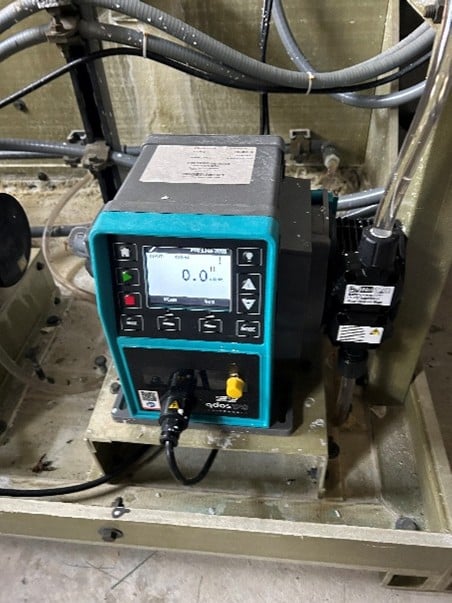
Distribution system optimization may involve detailed flushing programs, valve installation or rehabilitation, water age management, and directional flow control. Many of these efforts are enhanced using a complete hydraulic model of the distribution system.
Data management optimization is equally important. By standardizing data formats and centralizing information, utilities can eliminate inconsistencies, reduce errors, respond more swiftly to changes in water quality, and ultimately lower operating costs.
The Importance of Training and Education
As with many aspects of the evolving water utility industry, successful optimization depends heavily on ongoing training and education. Staying current with modern technologies and regulatory requirements ensures that utilities have the best information available to make informed decisions. With the right knowledge and tools, water systems can manage and operate more efficiently, benefiting both the utility and the communities they serve.