
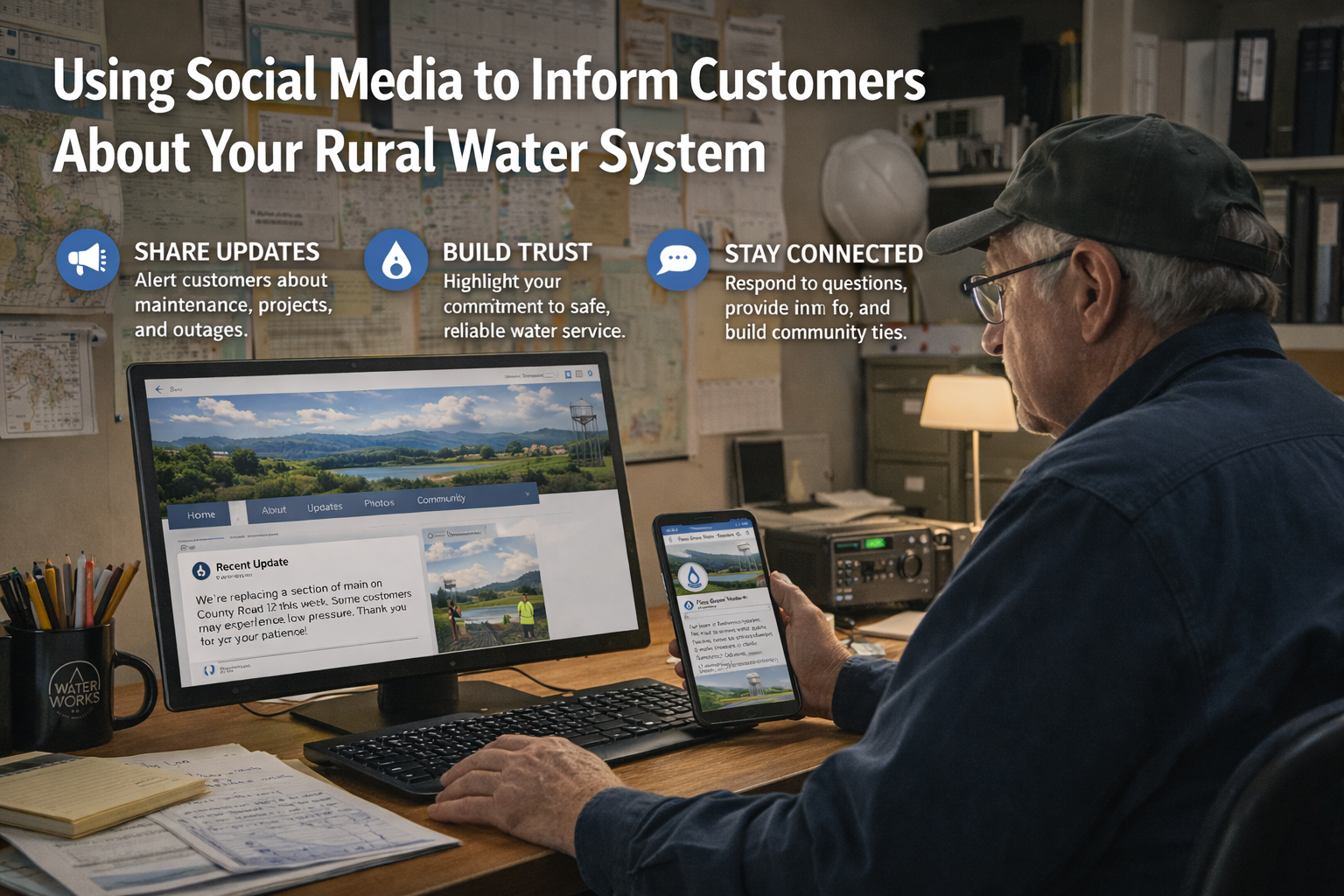
Community engagement is essential for small water systems—it builds trust, improves transparency, and helps you better serve residents—especially concerning challenging issues. But with limited staff, budgets, and communications capacity, social media can feel overwhelming.
The good news? A simple, intentional approach can go a long way. Here are some foundational best practices to help you get started.
Choosing the Right Platforms
With so many social media platforms available, it’s important to focus your efforts where your community is already active.
- Facebook is great for updates, notices, and community interaction.
- Instagram works well for visuals and behind-the-scenes content.
- Nextdoor is ideal for neighborhood alerts and local conversations.
- LinkedIn can help you connect with professionals and local businesses.
If you’re unsure where to start, try:
- Searching for your community online
- Looking at where similar organizations are active
- Asking residents directly or running a quick poll
Focus your energy on a few platforms rather than spreading yourself too thin.
Creating a Consistent Posting Schedule
Consistency builds trust. When people know what to expect—and when—they’re more likely to stay engaged.
Consider setting a predictable rhythm:
- Informative updates (weekly)
- Educational or fun content (weekly)
- Service updates or reminders (monthly)
For example:
- Tuesdays: System updates
- Fridays: Water facts or tips
- Monthly: Project or seasonal updates
You can track this using:
- A simple spreadsheet calendar
- Scheduling tools like Hootsuite, Sprout Social, or Buffer
Emergency updates may fall outside this schedule, but keeping a consistent look or format helps people quickly recognize important alerts.
Sharing Clear and Concise Information
Most people come to your social media pages looking for information, so clarity is key.
Focus on:
- Simple, accurate messaging
- Timely updates
- Easy-to-understand explanations
When sharing technical information:
- Add plain-language summaries
- Use visuals like maps, infographics, or photos
Clear communication reduces misinformation and builds trust in your system.
Why This Matters
By choosing the right platforms, posting consistently, and sharing clear information, you’re laying the groundwork for meaningful engagement. Even small steps can make a big impact.
In Part 2, we’ll explore how to deepen those connections and make your social media strategy even more effective.