
© Adobe Stock, Kletr
State Revolving Fund (SRF) programs are a valuable source of funding for drinking water and wastewater infrastructure projects, offering low-interest financing, favorable loan terms, and for qualifying applicants and projects, partial or complete principal forgiveness.
But if your system is new to SRF, the application process may seem daunting. To help demystify this funding path, we gathered seasoned SRF borrowers in a series of focus group sessions, to learn the secrets to their success. These systems represented both small and large utilities across the Mid-Atlantic and were commended by their state SRF programs for having especially successful SRF applications and/or projects (see Table 1).
We asked these systems about their SRF experience – what worked for them and what advice they would give systems who are new to this funding source. Here’s a summary of what we heard.
Table 1: Exemplary SRF applications / projects
| State | Utility type | Service area geography | Service area population | Project type | Project description |
|---|---|---|---|---|---|
| DE | County | ~180,000+ | Mix of suburban and rural | Clean Water | Wastewater force main replacement |
| DE | Private – MHP | ~100–250 | Rural / suburban fringe | Drinking Water | Drinking water upgrades and interconnection |
| DE | Municipal | ~40,000 residents | Urban / suburban | Drinking Water | Lead service line inventory |
| PA | Regional Authority | ~15,000 residents | Suburban | Drinking Water | PFAS – line extension |
| PA | Municipal | ~1,000 – 2,000 | Rural | Drinking Water | New system and interconnection |
| PA | Municipal | ~350 residents | Rural borough | Drinking Water | Standpipe replacement and water treatment plant upgrade |
| PA | Municipal | ~13,000 – 20,000 | Suburban / rural | Clean Water | Digester emerging contaminants |
| VA | Municipal | ~230,000 | Urban | Clean Water | Stormwater management and water quality improvements |
| VA | Municipal | ~79,000 | Urban / suburban | Clean Water | Combined sewer overflow tunnel project |
| VA | Municipal | ~6,000 | Rural town | Drinking Water | Water line replacement |
Know timelines and requirements
Familiarize yourself with your state SRF application timelines and requirements. Have a general understanding of federal rules that may apply to your project, including Build America, Buy America (BABA); American Iron and Steel (AIS); and Disadvantaged Business Enterprises (DBE) provisions.
Start early
Allow ample time to gather required information like financials and to communicate with decision makers and the public. In some states, there is a short window between notification of potential funding and deadline for full applications, so having documents in place is key to a timely submission.
Build your team
Since SRF applications require data from various departments, regular communication with utility staff is essential. For many applicants, engaging an experienced engineer was critical to the application’s success. Experienced borrowers also emphasize the importance of staying in touch with SRF staff throughout the process, which keeps things moving smoothly.
Consider using in-house expertise
If possible, utilizing in-house labor for planning, engineering, and construction can be cheaper than contracting these services out.
Take advantage of TA
While not a replacement for a utility’s staff or contracted engineer, no-cost technical assistance is often available and can be a game-changer in getting projects off the ground or in overcoming roadblocks.
Look for pre-development grants
Consider seeking funding for pre-application planning if your state offers it. This can be essential in getting your project shovel-ready with biddable drawings, technical specifications, and regulatory permits in place so that you are ready to hit the ground running when it’s time to submit a full application.
Clearly define your project and budget
Applications with a clear scope, solid cost estimates, measurable outcomes, and a realistic and well-defined project schedule are more likely to be successful. In your project description, tell a compelling story, clearly identify the problem that can’t otherwise be solved without the SRF funding, and highlight any co-benefits. Some borrowers suggested being willing to propose an innovative idea.
Obtain a financial audit
Required for SRF application in many states, this can be especially helpful for small water systems in putting together budget estimates.
Build in flexibility where you can
Develop a project description that allows some flexibility as the project evolves. Include contingency funds in your initial application to cover unforeseen expenses. Borrowers that had flexibility to shift budget funds (from engineering to construction, for example) avoided under- or over-spending.
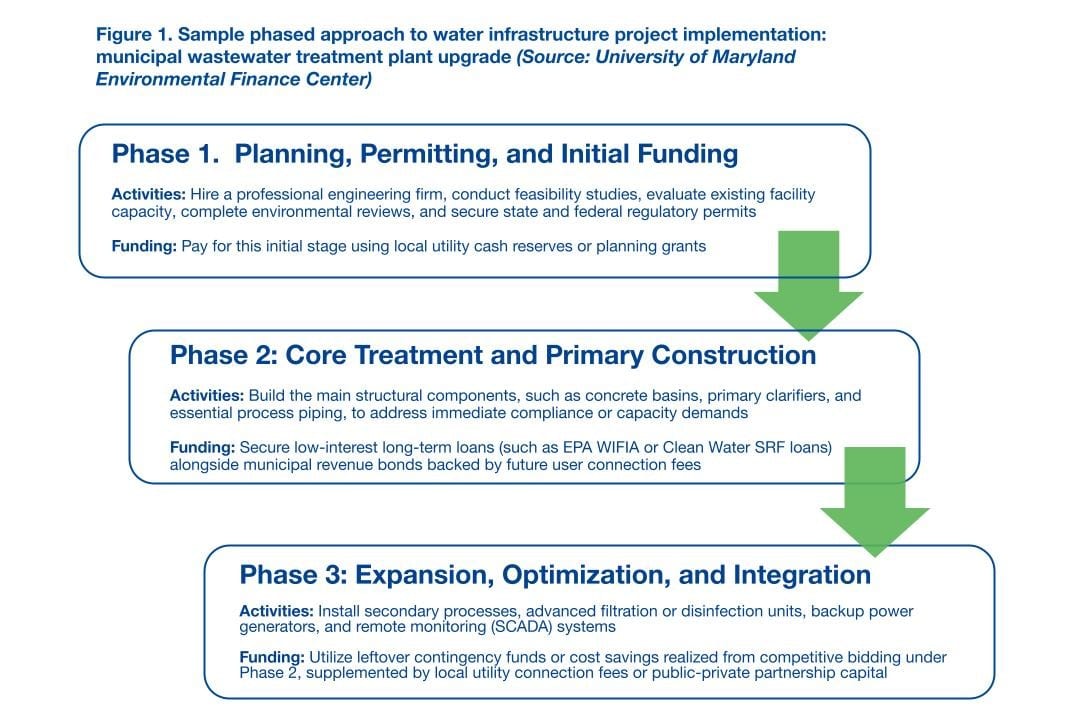
Use a phased approach
Completing larger projects in phases can be more logistically and financially feasible for small systems.
If your system needs help getting started with the SRF application process or determining whether SRF funding may be a good fit for your project – EFCN’s no-cost technical assistance may help. Learn more and contact us here.