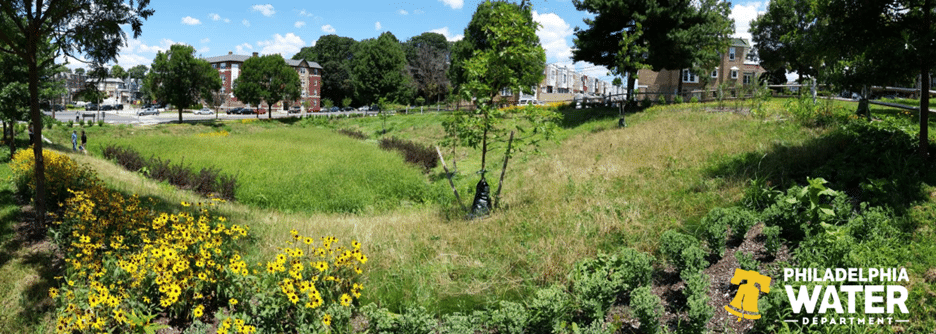

Gray infrastructure is not the only tool at hand to manage a community’s stormwater, and with increasing severe weather events in the wake of climate change, utilizing all assets at hand is critical to maintaining effective and reliable stormwater management systems. Green Stormwater Infrastructure (GSI) is a worthy investment for municipalities of all types, offering nature-based solutions for water management that can boost the capacity of traditional infrastructure while providing a series of other benefits, including beautified streets, minimized flood damage, and increased green jobs.
It’s important to know how to apply the right time, attention, and funding to not only your physical green infrastructure, but also your GSI workforce. Following commonly asked questions asked by attendees in our recent Environmental Finance Center Network (EFCN) webinar, From Plan to Progress: Investing in Your Green Stormwater Infrastructure Workforce, this article explores the City of Philadelphia’s strategy to strengthen its GSI workforce.
Philadelphia’s combined GSI and GSI workforce investment spans over a 25-year period and is designed to reduce combined sewer overflows by 85 percent. “So, it isn’t just a side project for us,” shared Aaron Kirkland, Grounds Maintenance Superintendent, Philadelphia Water Department (PWD). “It’s a part of a long-term systems-level approach to water management.”
Partnerships for a Pipeline
Who is a good partner and what role can they serve?
Partnerships can offer points of leverage in any scenario, including GSI workforce development, and can even boost capacity and fill gaps as they arise.
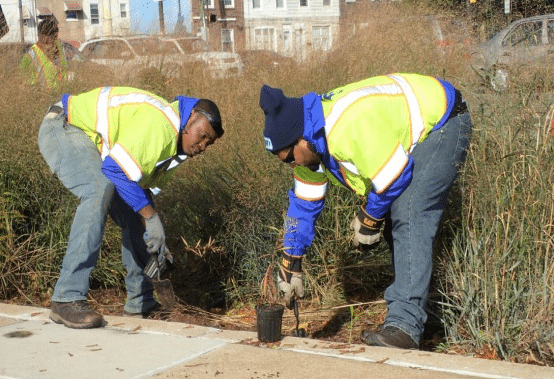
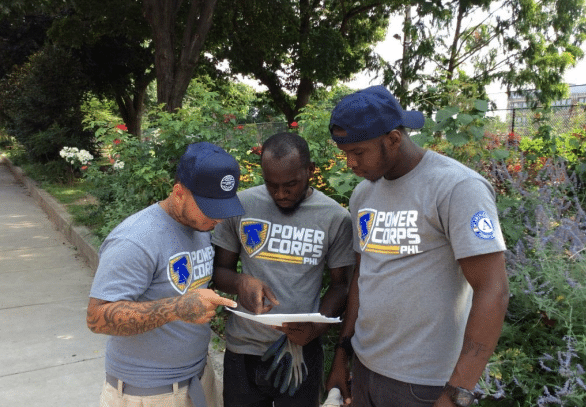
For PWD, the evolution of its GSI maintenance model from reliance on contractors to the creation of its own Green Stormwater Operations (GSO) unit with nearly 35 staff, relied in part on its partnership with PowerCorpsPHL, a workforce development (WFD) program that Kirkland says has been instrumental in building a “green jobs pipeline” of skilled and dedicated staff for the GSI maintenance team.
PowerCorpsPHL connected entry level job-seekers with in-demand positions at PWD, providing on-the-job training and without requiring a college degree. Those finishing the program often went on to fill fulltime positions at PWD.
“They helped buffer contract gaps,” Kirkland said of PowerCorpsPHL. “They managed logistics, and provided capacity while PWD was still building internal systems.”
Similar programs to PowerCorpsPHL may exist in other regions, and the organization also offers technical assistance to those looking to adapt their model locally.
PWD further strengthened its workforce pipeline through partnerships with local horticulture-focused high schools, which serve as both recruitment and community education spaces.
How can GSI workforce programs strengthen community connections?
Beyond boosting employment, PowerCorpsPHL also served as a meaningful connection between GSI work and the communities being served.
“PowerCorps crew members, they weren’t just doing the work. They were often community ambassadors. They were community members themselves, but they helped explain why GSI mattered and how it improved quality of life,” Kirkland shared. “That connection was important, especially to communities that have been historically underserved and marginalized.”
Darren Brown, Grounds Maintenance Crew Chief at PWD, began his career at PowerCorePHL, and said of his experience, “All this work I was doing, it was building purpose, it was building something meaningful for myself, and it was also teaching me that the work that I was doing was more than about maintenance, it was about giving back to the communities that I was raised in.”
The Power of Data
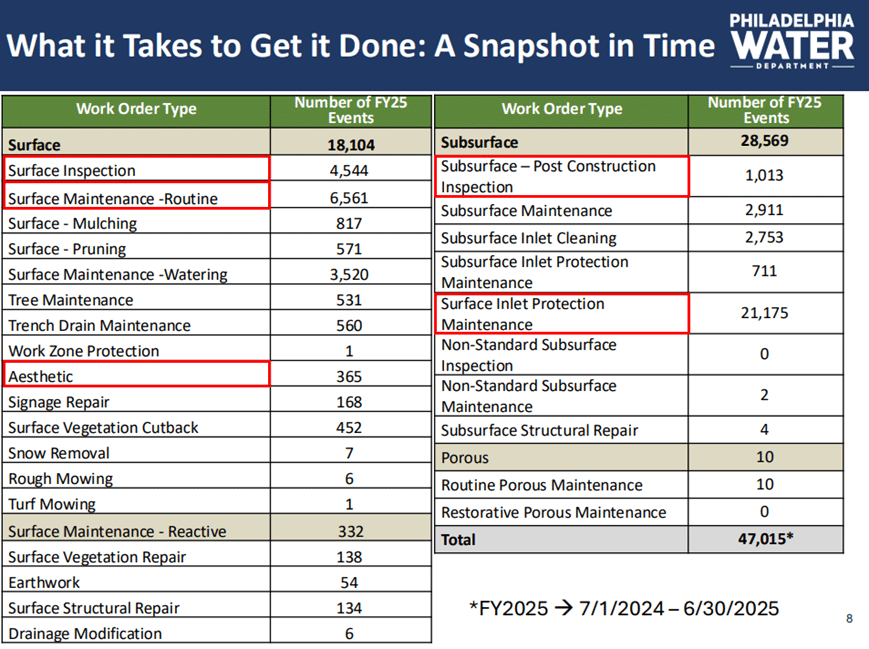
Data collection and analysis were crucial in transitioning from a proof-of-concept to a scalable, long-term investment in Philadelphia’s GSI workforce. With the right data, PWD was able to advocate for program growth, track maintenance tasks and work orders completed, and justify routine maintenance and workforce development.
Data also helped inform strategic, incremental work growth. As skills and capacity increased, so did logistical demands like waste disposal, transportation, watering, and supervision. “We had to be intentional about scaling the work up,” Kirkland shared.
What kind of data tools does PWD use?
PWD uses Cityworks, a user-friendly asset management system, where crew chiefs can upload site data, photos, and access mapping and work history directly from a tablet. Power BI is also used to create visuals and track goals.
Training as a Pillar
What kind of training is effective, and is it recommended for all staff?
Continuous investment in staff training and development has enabled the GSI maintenance team to take on more complex work and become leaders in the field.
“At the end of the day, our goal is really to build green industry professionals, people with transferable skills who can grow not only within PWD if they choose, but across the broader green economy,” Kirkland says.
What does apprenticeship look like?
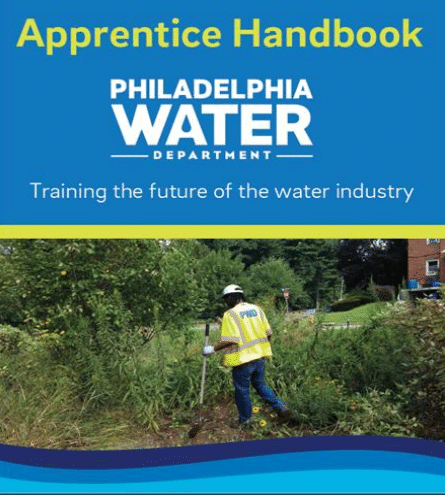
PWD’s 6-12 month apprenticeship program pairs enrollees with a seasoned mentor along with on-the-job training and classroom-based professional development.
Kirkland explained that the program serves as a bridge between WFD and permanent civil service by being highly catered to the individual – apprentices are only taken on when there’s a vacancy or skill gap to fill. “We are intentional about how we develop this person and how we create the position for this person at the end of their apprenticeship,” he shared.
In addition to their mentor, PWD’s HR department and other WFD program partners support an apprentice throughout their time in the system. This structure enhances staff development, certifications, field maintenance skills, inspections, and planning capabilities, Kirkland reported. “These trainings aren’t abstract. They support advancement into leadership and specialized roles.”
What kind of trainings are offered?
The type of trainings offered to PWD’s GSI workforce are vast and varied, from in-the-field to in PWD’s own classroom, which is complete with laptops and courses developed in-house that are being incorporated into a Learning Management System. To support its training model, PWD utilizes the Center for Watershed Protection Agency’s ANSI accredited program to help “train their trainers,” so to speak.
Backed by data and logical workflow, some trainings are seasonal or regimented to enhance expected demands, like tree-pruning trainings taking place in early spring. Others are on a more as-needed basis, identified by areas needing improvement in the system overall.
Professional development is not limited to lower-level staff; all members of the hierarchy are encouraged to continue improving their skillset.
Watch to Learn More
Overall, Philadelphia’s approach to investing in its GSI workforce has been a multi-faceted and intentional effort, leveraging partnerships, data-driven decision-making, and a commitment to staff development to build a sustainable and effective maintenance program.
To learn more insights from Kirkland and Brown of the PWD, watch From Plan to Progress: Investing in Your Green Stormwater Infrastructure Workforce.