
Read Part 1 of Getting Your Financial House in Order here.
The importance of good financial practices to support SRF applications – and funding requests in general – cannot be understated. In Part 1, we introduced key practices needed to demonstrate your financial responsibility in a State Revolving Fund (SRF) application. As in any request for funding, it is prudent to clearly show your ability to use the funding appropriately to serve a need, and that you can repay the loan. So how can you communicate to potential funders that money will be used wisely and that the risk of default is minimized?
Here’s what you need to do:
- Start with a financial audit. As with any funding proposal, ensure you have a recent financial audit. If your system has not conducted one within at least two years, inquire with your state agency SRF office about what assistance may be available to support one. As a public entity, you are likely required to conduct a competitive bid for auditing services by issuing an RFP and soliciting proposals. Look for an accounting firm that specializes in audits and has worked with utilities.
- Review past and current revenues. Ensure you have a solid understanding of your system’s current revenue trends and can project future revenue based on your ratepayer profile.
- Understand Cash Flow and Cash Reserves. Most if not all accounting systems can deliver a Cash Flow Financial Report, but few can adequately forecast cash reserves into the future. It’s incumbent for managers and administrators to review cash flow at least quarterly if not monthly so they are comfortable with their ability to cover all expenses and build cash reserves. Maintaining and documenting cash reserves for ongoing operations and unanticipated expenses will help identify financial needs within the SRF application.
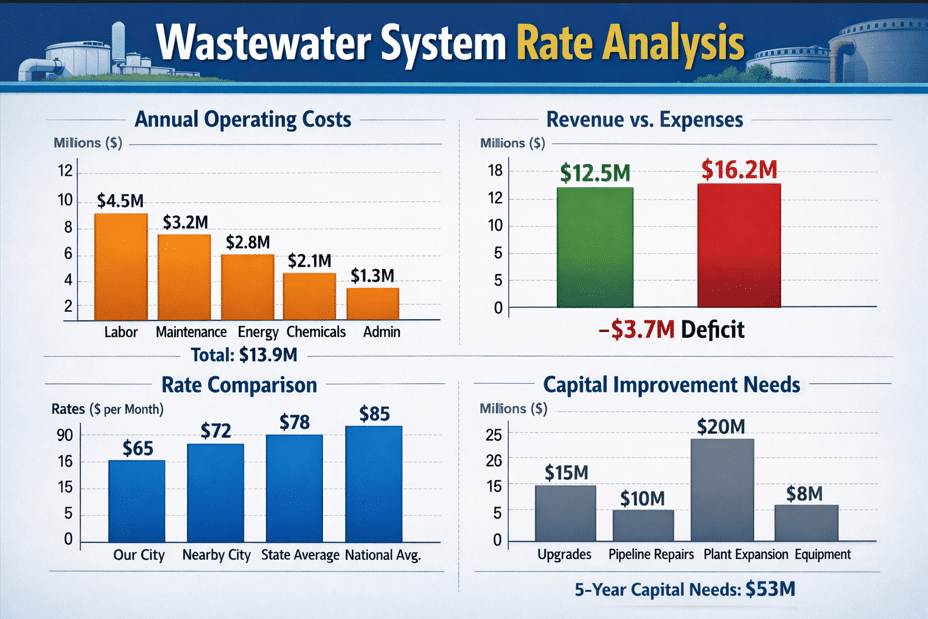
- Consider a rate study. When was the last thorough rate analysis conducted? Be sure you have assessed and considered inflation and all potential future costs for your current rates and for anticipated rate increases. Documenting system users and periodically updating this information is important to adequately plan for the future. Accurately assessing and communicating current and future rates to payers and local officials ensures no one is surprised by necessary rate increases.
- Create or update your asset inventory. Establishing and maintaining good procedures and records supports your application as well as ongoing operations and maintenance budgeting. If you do not already have one, also consider building a capital improvement plan which includes all of your existing assets, their anticipated lifespan, an approximate time they need replacement and the projected cost to replace.
Now you are ready to start pulling together financial documents about existing debts, cash reserves, operational expenses, and rate plans to get the ball rolling. Make use of the EFCN state level directory which includes funding sources by state or territory, along with contact information for SRF programs and other funding sources. It’s a great place to begin if you’re just getting oriented. If you still feel the need for assistance, check out EFCN’s technical assistance program at no cost to see how we can help.