
Federal funding for small water and wastewater systems can make important infrastructure projects financially viable but can also bring additional compliance requirements like those in the Davis-Bacon Act (DBA). The DBA is a federal law requiring payment of prevailing wages on federally funded or assisted construction projects that applies to contracts over $2,000. It can apply to projects supported through the Clean Water State Revolving Fund (CWSRF) and Drinking Water State Revolving Fund (DWSRF).
Davis Bacon Act
DBA is a worker protection law dating back to 1931 (with updates taking place in 1935, 1964, and 2023). It requires that laborers and mechanics working on federally funded or federally assisted construction projects get paid no less than the “prevailing wage” plus applicable fringe benefits. This covers those doing a particular trade’s physical work, including, but not limited to, operating equipment, laying pipe, and doing electrical work. It does not cover people doing non-manual work like engineering, project management or clerical tasks. The Davis-Bacon compliance requirements for contracts above $2,000, typically travel with that money down the funding chain, from funding agency to the contractor and subcontractor. The standard DBA clauses need to be written into the covered contracts, and they flow down to subcontracts and subrecipient awards, too.
Davis-Bacon and Related Acts (DBRA)
A lot of times, Davis-Bacon Act is used interchangeably as Davis-Bacon and Related acts (DBRA) as key statutory labor protections. Those acts include the Contract Work Hours and Safety Standards Act (CWHSSA) which applies to contracts over $100,000 and on top of the prevailing wage rules, adds overtime pay requirements and Copeland Anti-Kickback Act which prohibits contractors from forcing workers to give up any part of their compensation and requires weekly payroll submissions.
Wage Determination
Wage Determination is at the heart of DBA compliance. The wage determination document sets the hourly rate and fringe benefit amount for each labor classification in a project’s geographic area and construction type. Wage determinations are published on SAM.gov and vary by location and trade.
A few important notes about wage determinations:
- Classification is based on the actual work performed, not job titles. A contractor can’t label someone a “laborer” to pay a lower rate if the person is doing skilled pipefitting work. The classification should match the real tasks being done on site.
- Fringe benefits are flexible in how they’re satisfied. Fringe benefits can include things like health insurance or retirement contributions. Contractors can meet this requirement through qualifying benefits, cash payments, or some combination of the two.
- Sometimes the work doesn’t fit a listed classification. Construction projects are complicated, and sometimes the trade work needed on your job may not be already listed in the wage determination. If that happens, the project needs to go through a formal conformance process to establish an appropriate classification and wage rate. A contractor cannot simply pick classification based on the lower wage rate.
In 2023, the Department of Labor was given the authority to directly adopt state or local prevailing wage rates. If your state has its own prevailing wage law, check whether it intersects with your federal wage determination. The two systems are now allowed to line up more directly.
Role of Contracting Agency
A contracting agency is the utility or municipality getting funding under CWSRF or DWSRF. The role of a contracting agency is to make sure the correct and current wage determinations are built into the bid solicitation documents from the start of procurement, as the contractor submits bids based on the wage rates in the solicitation. The EPA requires that applicable DBA contract provisions be built into covered contracts, along with the specific provisions or reference links. A pre-award checklist with questions in Figure 1 is useful to ensure that you have met requirements under DBA part of bid solicitation.
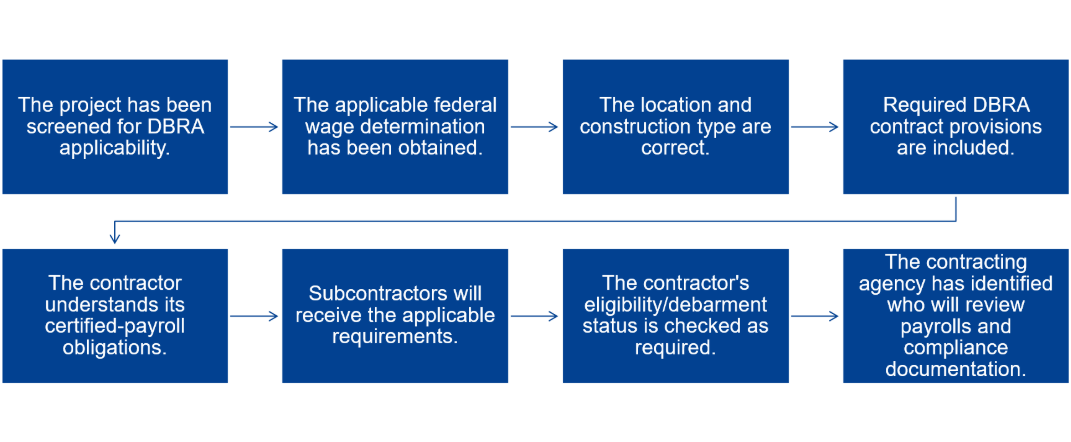
Figure 1: Pre-award checklist process and questions (Source: University of Maryland Environmental Finance Center)
Payroll Review & Oversight
After the contract is awarded, ensure the timely review of payroll. The prime contractor is responsible for submitting weekly certified payroll using Form WH-347. However, using that exact form isn’t required. Contractors can submit the same information through other formats or payroll software platforms, as long as DBA requirements are met.
The contracting agency needs to check the following:
- Does the listed classification actually match the work being performed on site?
- Does the wage meet the applicable wage determination? Are hours reported accurately and are deductions appropriate?
- Are overtime requirements being met under the related Contract Work Hours and Safety Standards Act?
The contractor is also required to post the applicable wage determination along with the Department of Labor’s “Employee Rights” notice (Form WH-1321) at the job site, so workers can see what they are entitled to be paid. As part of payroll review, contracting agencies can periodically conduct random site visits, checking that this posting is posted and visible. They can also conduct confidential worker interviews using form SF-1445. The goal of these site visits and interviews is to ensure the accuracy of payroll records. Certified payrolls and related compliance records should be kept on file for at least three years after project completion. An auditor or DOL will ask to see these records if an audit or complaint arises.
Non-Compliance with DBRA
Violations carry real financial and contractual weight. If workers were underpaid, the contractor may be required to pay back wages and other relief owed to those workers. Contract payments can be withheld in amounts sufficient to cover unpaid wage liabilities, along with any liquidated damages tied to overtime violations. In more serious cases, violations can lead to contract termination, and the responsible contractor can be debarred from federal contracting for three years.
Conclusion
Compliance with federal regulations can feel tedious and intimidating, but it’s manageable once you understand it. A quick check can be performed to ensure DRBA compliance with questions in Figure 2. Most of these can become a simple routine around payroll review and staying engaged throughout construction. Also, don’t be afraid to ask your funding agency or your state’s SRF program for help interpreting particular clauses. It’s a well-worn process, and you’re far from the first system to walk through it.
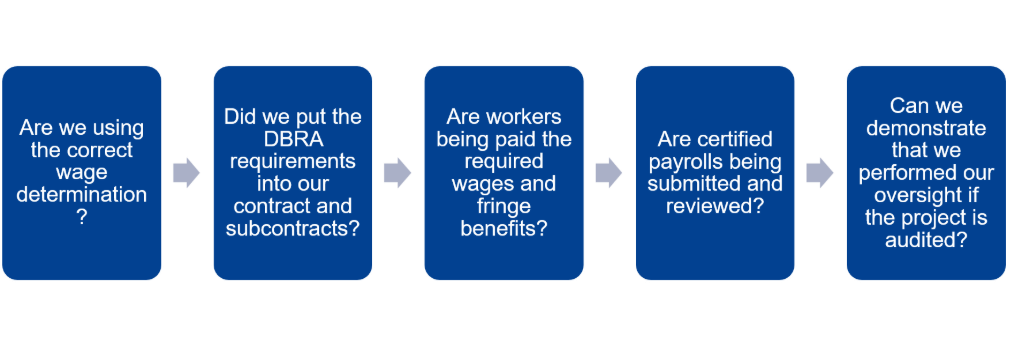
Figure 2: DBA Compliance check for contracting agency (Source: University of Maryland Environmental Finance Center)