

Practical guidance for lagoon operators and utility personnel
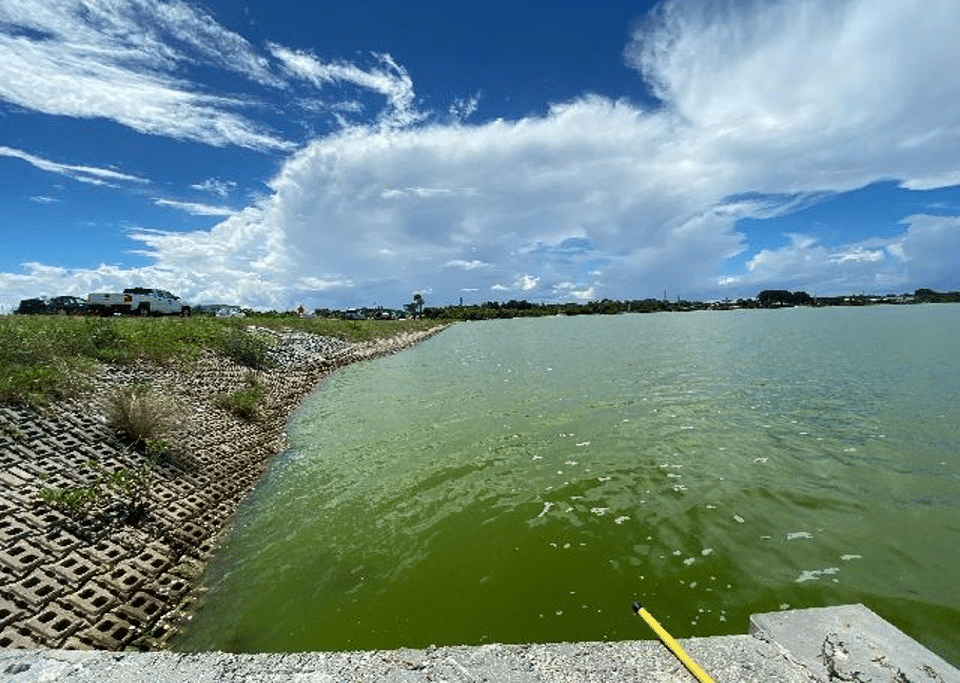
Algae blooms commonly develop in wastewater lagoons during warm summer months, driven by increased sunlight and nutrient availability. (Photo courtesy of the Mississippi Water Resources Research Institute)
Wastewater lagoons can appear deceptively simple. Wastewater enters a pond, natural biological processes provide treatment, and treated water eventually leaves the system. Beneath the surface, however, a complex biological treatment system is constantly responding to changes in organic loading, temperature, dissolved oxygen, microorganisms, algae, sludge, and hydraulic conditions.
For lagoon operators, understanding Biochemical Oxygen Demand (BOD) is one of the keys to understanding how well that system is working.
BOD: Food for the Treatment Process
BOD is a measure of the biodegradable organic material in wastewater based on the amount of oxygen microorganisms require to break it down. In simple terms, BOD represents the “food” available to bacteria.
Effective biological treatment requires three things to come together: BOD, microorganisms, and dissolved oxygen (DO). Aerobic microorganisms consume organic wastes and convert them into new biomass. If any part of this relationship is disrupted, treatment performance can suffer.
Most lagoon systems are designed primarily to remove BOD and total suspended solids (TSS), with typical removal efficiencies of approximately 80% to 85%.
In a typical multi-cell lagoon, most BOD removal occurs in the first cell. If influent BOD is approximately 200 mg/L and Cell 1 achieves 80% removal, BOD leaving that cell should be around 40 mg/L. Later cells can then provide additional treatment, including nitrification, settling, and polishing.
| BOD + microorganisms + dissolved oxygen = effective biological treatment |
Temperature Changes Everything
Lagoon treatment is biological, which means temperature matters. Cold-tolerant heterotrophic bacteria continue removing BOD at lower temperatures, but treatment occurs more slowly. As temperatures rise above approximately 68°F, warm-loving mesophilic bacteria become dominant, and BOD removal accelerates significantly. During the transition, however, operators may experience a temporary treatment slump as one microbial population declines before the other becomes fully active.
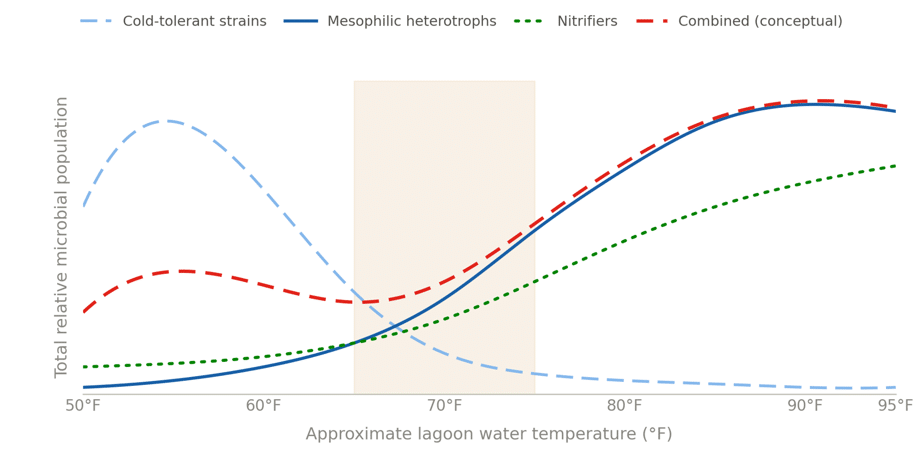
Figure 1. Conceptual microbial transition as lagoon water warms from spring into summer. Source: presentation from the Mississippi Water Resources Research Institute
This creates an interesting operational challenge: warmer weather improves bacterial activity but simultaneously increases the system’s oxygen demand. Heterotrophic bacteria require approximately 1.5 pounds of oxygen for each pound of BOD metabolized, while approximately 4.5 pounds of oxygen are required for each pound of ammonia oxidized. Maintaining a DO residual of approximately 2–3 mg/L provides additional protection against shock loads and anaerobic conditions.
Unfortunately, just when microorganisms need more oxygen, warmer water becomes less capable of holding it. The presentation illustrates that water at 50°F may hold approximately 11 mg/L of oxygen under laboratory saturation conditions, compared with only about 8 mg/L at 80°F.
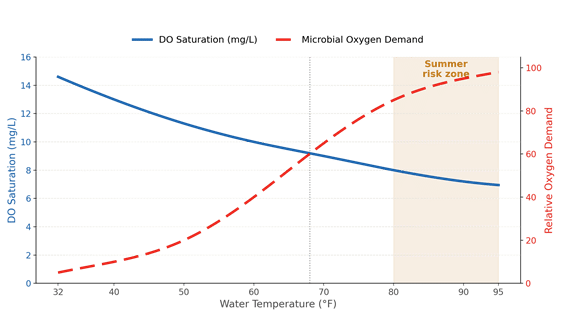
Figure 2. As water temperature rises, oxygen saturation falls while biological oxygen demand increases. Source: presentation from the Mississippi Water Resources Research Institute
Look Below the Surface
Sludge accumulation is another critical consideration. Sludge naturally develops as solids and biological material settle to the lagoon bottom, but excessive accumulation reduces effective lagoon volume and retention time.
As temperatures rise, anaerobic bacteria within the sludge become more active. Gases such as methane, carbon dioxide, and hydrogen sulfide can become trapped in the sludge and cause portions of it to rise. The result can be odors, increased oxygen demand, and releases of BOD, TSS, ammonia, and phosphorus back into the water column.
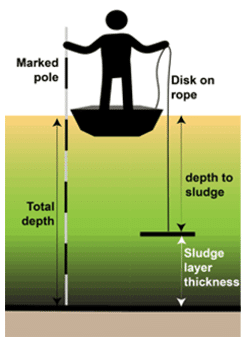
Figure 3. Sludge depth is determined by comparing total lagoon depth with the measured depth to the sludge layer. Source: presentation from the Mississippi Water Resources Research Institute
Operator check: Conduct periodic sludge surveys rather than assuming adequate treatment volume remains available. The presentation recommends keeping sludge below 25% of lagoon depth. Excessive sludge can contribute to rising sludge, short-circuiting, loss of retention time, and releases of BOD and nutrients.
Use BOD as a Diagnostic Tool
BOD testing is more than a compliance requirement—it can be a valuable troubleshooting tool. Sampling between lagoon cells can help operators determine where treatment is succeeding or failing. Specialized tests can provide even more information. Carbonaceous BOD testing can remove the influence of nitrification occurring in the test bottle, while soluble BOD testing can help identify the contribution of algae.
For example, one case in the presentation showed final effluent BOD of 110 mg/L. Testing between cells revealed that Cell 1 was actually achieving an 84% removal rate. BOD increased dramatically in a later cell, and soluble BOD testing ultimately pointed to algae as the problem.
That distinction matters. Increasing aeration in Cell 1 would not solve a problem originating from algae in a downstream cell.
Manage the System, Not Just the Numbers
Successful lagoon operation requires operators to understand the biological and physical processes behind their laboratory results. Maintaining DO around 2–3 mg/L, monitoring sludge and keeping it below 25% of lagoon depth, identifying and correcting short-circuiting, and conducting BOD testing between cells can provide operators with a much clearer picture of system performance.
A high BOD result tells you there is a problem. Understanding where the BOD originates and why it is occurring tells you what to do about it.