
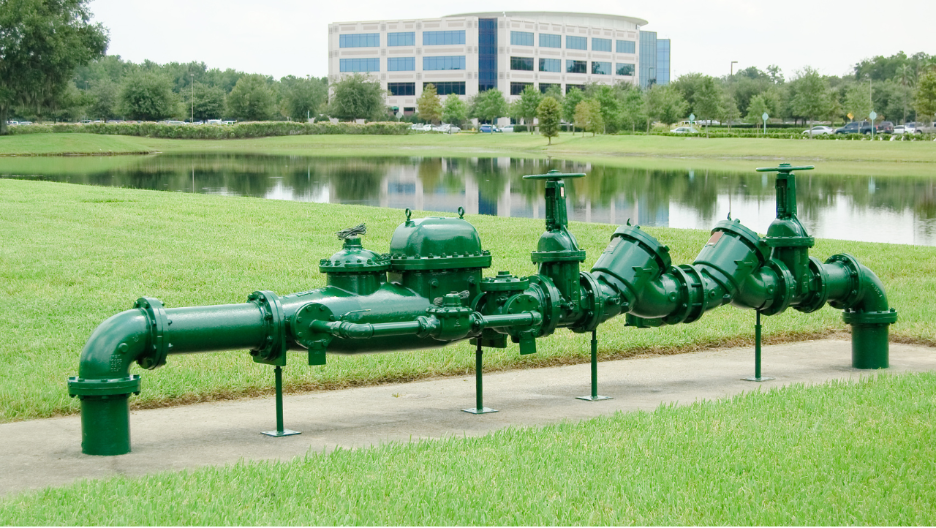
Backflow regulator. Photo Credit: Hockney, from Getty Images
As water and wastewater operators, you are on the front lines of protecting public health. One critical but sometimes overlooked responsibility is preventing backflow and managing cross connections. These issues can introduce contaminants into potable water supplies, leading to serious health risks, regulatory violations, and costly incidents. Understanding the basics helps maintain system integrity and safeguards communities.
What is a Cross Connection?
A cross connection is any actual or potential link between a potable drinking water system and a non-potable source, such as wastewater lines, irrigation systems, industrial processes, or fire protection setups. Backflow is the unintended reversal of water flow through such a connection, allowing contaminants to enter the clean supply.
There are 2 primary types of backflow:
- Back siphonage – Occurs when negative pressure vacuum in the supply line pulls water backward, often due to main breaks, high demand or firefighting.
- Backpressure – Happens when downstream pressure exceeds supply pressure, pushing non-potable water or chemicals into the drinking water system. Common in boilers, elevated tanks, or pressurized industrial lines.
Backflow events have caused documented disease outbreaks and contamination incidents. Even brief events can affect thousands of customers, highlighting why proactive control is nonnegotiable.
Backflow Prevention Devices
Backflow prevention devices are the mechanical backbone of protection. Common types include:
Air Gap
The simplest and most effective, physical separation between the potable supply outlet and a non-potable vessel. Ideal for high hazard applications like sewage connections.
Reduced Pressure Zone Assembly (RPZA)
Offers high protection with two check valves and a relief valve that vents to the atmosphere if pressure drops. Suitable for high hazard sites.
Double Check Valve Assembly (DCVA)
Uses two independent check independent check valves for moderate hazards, such as fire sprinklers.
Pressure Vacuum Breaker (PVB) or Atmospheric Vacuum Breaker (AVB)
Protects against back siphonage only, often used in irrigation. Selection depends on the hazards level (low, moderate, or high) and local regulations. Devices must be installed correctly, tested annually (or as required), and maintained by certified testers.
Cross Connection Control Programs
Cross connection control programs go beyond devices. Effective programs include legal authority (ordinances), customer surveys, plan reviews for new construction, record keeping, and public education. As an operator, you may participate in inspections, verify test reports, or respond to potential hazards. Regular training keeps your team sharp, plumbing changes, and new installations can create risks quickly.
Best practices for operators:
- Prioritize high hazard facilities (hospitals, factories, car washes) during surveys.
- Ensure backflow assemblies are accessible for testing and not bypassed.
- Document everything; accurate records protect your utility during audits.
- Educate customers; a simple garden hose submerged in a chemical tank can create a deadly cross connection
By staying alert, operators prevent contamination, ensure compliance with standards like those from the EPA and AWWA, and build public trust. Backflow prevention isn’t just regulation; it’s a core duty in delivering safe water every day.