

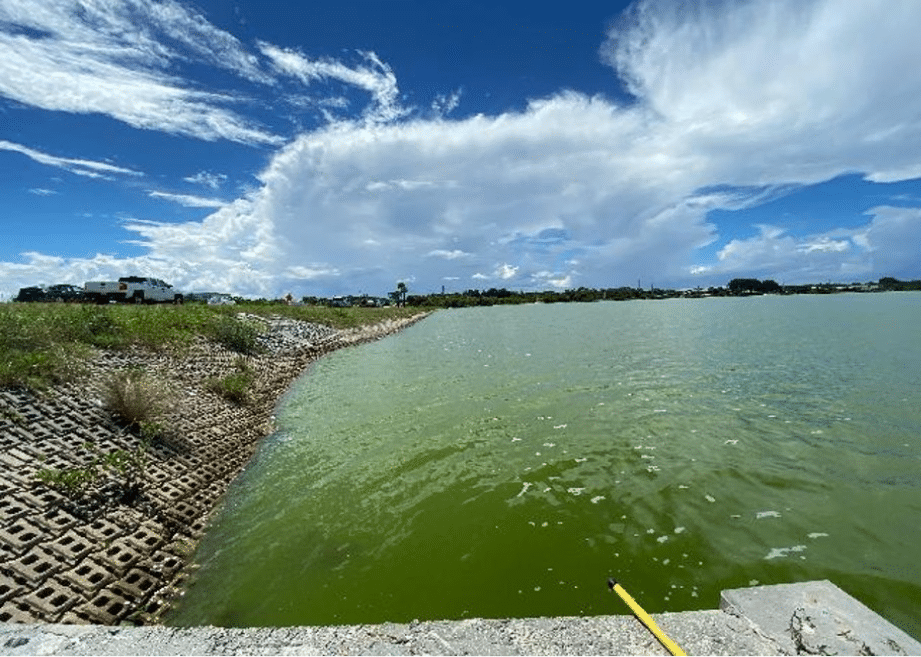
Algae blooms commonly develop in wastewater lagoons during warm summer months, driven by increased sunlight and nutrient availability. (Photo courtesy of the Mississippi Water Resources Research Institute)
As temperatures rise across the country, wastewater lagoon operators face seasonal challenges that can affect treatment performance, permit compliance, and overall system health. Understanding how warmer temperatures affect lagoon biology, dissolved oxygen, and algae growth is essential for maintaining reliable treatment throughout the summer months.
While warm weather accelerates biological treatment processes, it also creates conditions that can lead to algae blooms, odor complaints, dissolved oxygen fluctuations, and increased maintenance demands.
Understanding these seasonal changes and responding proactively can help operators maintain stable treatment performance throughout the hottest months of the year.
One of the most noticeable changes during late spring and summer is increased biological activity within the lagoon. Warmer water temperatures stimulate microbial growth, allowing waste to break down more rapidly. However, warm water also holds less dissolved oxygen, creating a delicate balance between treatment efficiency and oxygen availability.
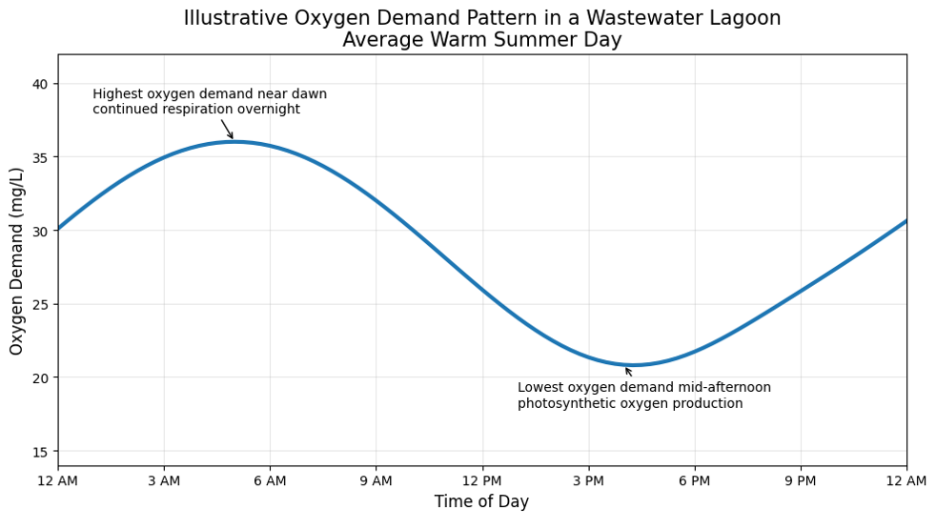
Dissolved oxygen levels in lagoons fluctuate throughout the day, often dropping to their lowest levels in the early morning hours.
At the same time, longer daylight hours and intense sunlight encourage algae growth. A healthy algae population can be beneficial because it produces oxygen during daylight hours, supporting the treatment process. However, excessive algae growth can create problems. Large algal blooms can increase total suspended solids in effluent, elevate pH levels, and cause significant swings in dissolved oxygen between day and night.
Odor issues often become more common during warm weather as lagoons undergo turnover events. During turnover, deeper water layers mix with surface water, releasing trapped anaerobic gases and producing strong odors. These conditions can generate complaints from nearby residents and indicate declining treatment performance.
To prevent these problems, operators should focus on maintaining adequate dissolved oxygen levels. Increasing aeration is often one of the most effective management strategies. Mechanical aerators and diffused air systems can help offset oxygen losses associated with higher temperatures while supporting the increased biological demand. Many facilities can even reduce their overall energy costs by strategically cycling aerators while still maintaining dissolved oxygen concentrations above recommended levels.
Regular monitoring is crucial during the summer months. Operators should consistently measure dissolved oxygen and pH levels, paying special attention to early-morning conditions when oxygen concentrations are usually at their lowest. Monitoring water levels, observing changes in lagoon color, and watching for excessive foam, odors, or vegetation growth can provide early warning signs of developing problems.
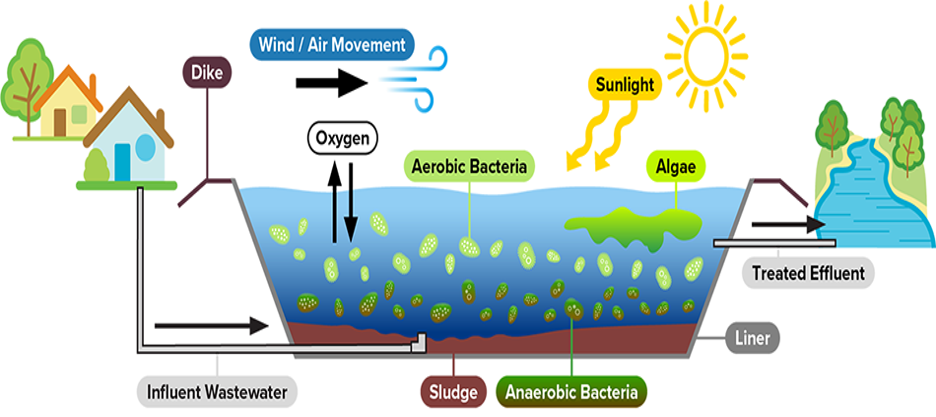
Well-maintained lagoon systems rely on proper monitoring, aeration, and routine inspections to perform effectively during summer conditions. (Graphic courtesy of the EPA)
Algae management should emphasize prevention rather than elimination. Reducing excess nutrient loading, maintaining proper lagoon depth, and monitoring for rapid color changes can help control blooms before they become problematic. Likewise, duckweed coverage should be managed carefully. While some duckweed can be beneficial, excessive coverage can restrict oxygen transfer and contribute to odor issues. A general goal is to keep duckweed coverage below 40 percent of the lagoon surface.
Summer is also an ideal time for comprehensive inspections and maintenance activities. Operators should routinely evaluate pumps, aerators, disinfection systems, flow meters, and autosamplers. Periodic calibration of dissolved oxygen and pH instruments ensures accurate data collection and reliable operational decisions. Annual assessments of sludge accumulation, valve operation, and dike conditions are equally important for maintaining long-term lagoon performance.
Preparation remains the best defense against summer treatment challenges. Maintaining adequate water volume in the spring, controlling vegetation around lagoon banks, removing cattails and woody growth, and inspecting for erosion or animal damage can significantly improve system performance during periods of extreme heat.
By anticipating seasonal challenges before they develop, operators can reduce the risk of permit violations, extend the life of lagoon infrastructure, and continue providing reliable wastewater treatment to the communities they serve. With proactive management, regular monitoring, and timely maintenance, wastewater lagoon systems can reliably provide effective treatment throughout the summer while minimizing operational challenges and protecting water quality.