
Small wastewater treatment plants (WWTPs) serve many of our country’s towns and rural communities. With few staff, limited resources, and rising regulatory expectations, WWTPs are constantly asked to do more with less.
The challenge is becoming more acute with the appearance of new contaminants such as per- and polyfluoroalkyl substances (PFAS), pharmaceuticals, and endocrine disrupting chemicals. As public awareness increases and regulations catch up, small systems need reliable and affordable options to protect public health. This blog explores how granular activated carbon (GAC) and membrane bioreactors (MBR) can help small wastewater systems meet merging challenges.
Evolving Regulations for Contaminants
For many small WWTPs, day-to-day operations already strain budgets. Yet the bigger challenge may lie in what’s coming next. Communities are increasingly worried about contaminants that traditional treatment methods struggle to remove. PFAS, also known as “forever chemicals,” have been linked to health risks even at very low concentrations. Pharmaceuticals and endocrine-disrupting compounds are also appearing in wastewater at levels that raise concerns for human health and ecosystems.
Regulators are beginning to respond by tightening guidelines and preparing stricter discharge limits. EPA is currently enforcing drinking water standards for PFOA and PFOS, signaling a broader regulatory shift. States like Delaware are taking steps to regulate PFAS in drinking water, aligning with the EPA’s enforceable Maximum Contaminant Levels (MCLs). Delaware lawmakers passed Senate Bill 72, which mandates PFAS testing by water providers beginning in 2026 and requires compliance with EPA MCLs by 2029. The bill also requires public notification of PFAS monitoring results, reinforcing transparency and public health protection. In future, PFAS regulation in wastewater treatment is expected as well, focused on monitoring and data collection under NPDES, with full discharge limits expected in the next regulatory cycle.
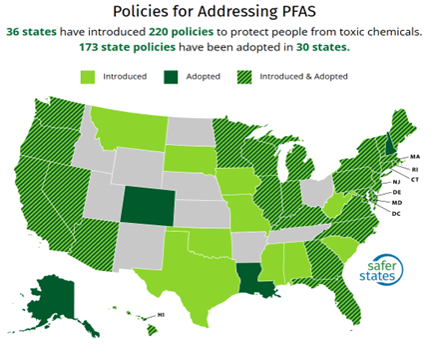
Figure 1: A state-by-state PFAS regulatory map shows the growing patchwork of policies that small systems must now navigate.
Source: https://www.saferstates.org/priorities/pfas/
Granular Activated Carbon
There is a clear need for technologies that can effectively remove emerging contaminants. Granular Activated Carbon is one such technology being integrated into the wastewater industry.
How it works:
GAC adsorbs or captures contaminants on the surface of a porous carbon media (I’ll admit, I had to double-check that adsorb wasn’t a typo).
Strengths:
- Proven effectiveness for PFAS, pharmaceuticals, and many organic contaminants.
- Straightforward to operate compared to some advanced technologies.
- Also improves taste and odor.
Challenges:
- GAC eventually becomes saturated and must be replaced or regenerated.
- Transporting and regenerating spent carbon can add cost and logistical complexity.
For small plants, modular GAC units are available that can be scaled to demand. Some utilities like Lee county in Florida are exploring shared service agreements for carbon regeneration, allowing several systems to pool resources and reduce costs.
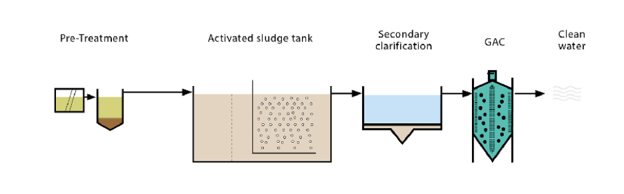
Figure 2: Simple schematic of a treatment system with GAC.
Sources: https://www.passavant-geiger.com/en/product/passavantr-granular-activated-carbon-filtration-gac & https://www.euwa.com/activated-carbon-filtration.html
Membrane Bioreactors
Membrane Bioreactors (MBRs) combine biological treatment and membrane filtration in one compact unit. The bioreactor uses microorganisms to break down organic matter, while the membranes act as a physical barrier that filters out suspended solids and pathogens. For small systems, packaged membrane skids are available that combine treatment, controls, and monitoring in one unit. However, they require operator training and ongoing maintenance commitments.
How it works: The bioreactor breaks down organic matter using microorganisms, while the membranes act as a physical barrier that filters out suspended solids and pathogens. Depending on the membrane pore size, they can also remove very fine particles and some dissolved contaminants.
Strengths:
- Very high removal efficiency for pathogens and many emerging contaminants.
- Compact footprint, which makes them appealing to systems where space is limited.
Challenges:
- Higher capital costs and operational demands compared to GAC.
- Membranes can be prone to fouling, which requires careful monitoring and maintenance.
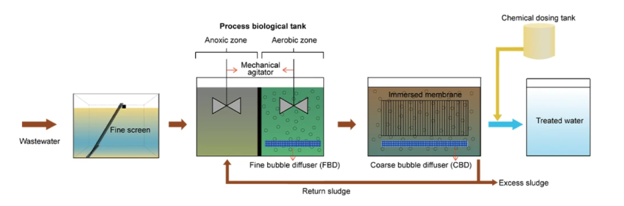
Figure 3: Simple schematic of a membrane system. Source: MBR – Innovative & Effective Wastewater Treatment System
Pairing GAC and Membranes for Better Results
Pairing GAC and membranes takes advantage of their complementary strengths. GAC pretreatment removes organics that might otherwise clog membranes, extend membrane life, and improve efficiency. The combined arrangement can be more effective for emerging contaminants. While still relatively new for small WWTPs, packaged or pilot-scale systems can offer a pathway to affordable compliance without having to reinvent the wheel.
A recent review of pilot and full-scale projects highlights how integrated approaches combining GAC absorption with membrane filtration and oxidation steps are achieving high contaminant removal and reuse-quality effluent. One pilot system that paired sand filtration, ultrafiltration, ozonation, and GAC achieved strong removal of organic matter, odors, and emerging contaminants, demonstrating real-world viability for smaller facilities.
Conclusion
Small systems are on the frontlines of protecting public health while balancing affordability and compliance. Professionals in this industry will have to stay informed on the evolving PFAS regulations and start planning to protect their communities. GAC and membrane technologies are not one-size-fits-all, but they offer practical tools for tackling emerging contaminants. With thoughtful planning and partnerships, communities can prepare for a future where advanced treatment technologies are no longer optional, but essential.