
With limited staff, limited funding, and aging assets, small wastewater systems often face major infrastructure challenges. Projects such as lagoon upgrades, sewer line replacements, lift station repairs, treatment plant improvements, or infiltration and inflow (I/I) reduction efforts can be highly visible to the public and may require significant financial investment. These projects may also involve road closures, construction disruptions, temporary service interruptions, or rate increases.
Even when a project is necessary for public health, environmental protection, or regulatory compliance, it can face resistance if customers do not understand why the work is needed or how decisions are being made. Community support can make the difference between a project moving forward smoothly or becoming delayed, contested, or difficult to finance. Community engagement is particularly important when:
- Sewer rates may increase
- Loan or debt financing is required
- Construction will impact roads, businesses, or neighborhoods
- The project is addressing sewer backups, odors, or wastewater overflows
- Regulatory agencies require costly upgrades
- Projects will take multiple years to complete
- Customers are concerned about affordability
Many funding agencies also expect utilities to demonstrate public participation during the funding process. Showing that the community has been informed and engaged can strengthen funding applications and help projects move forward more efficiently. In this blog, we discuss three strategies for that utilities can use for effective community engagement.
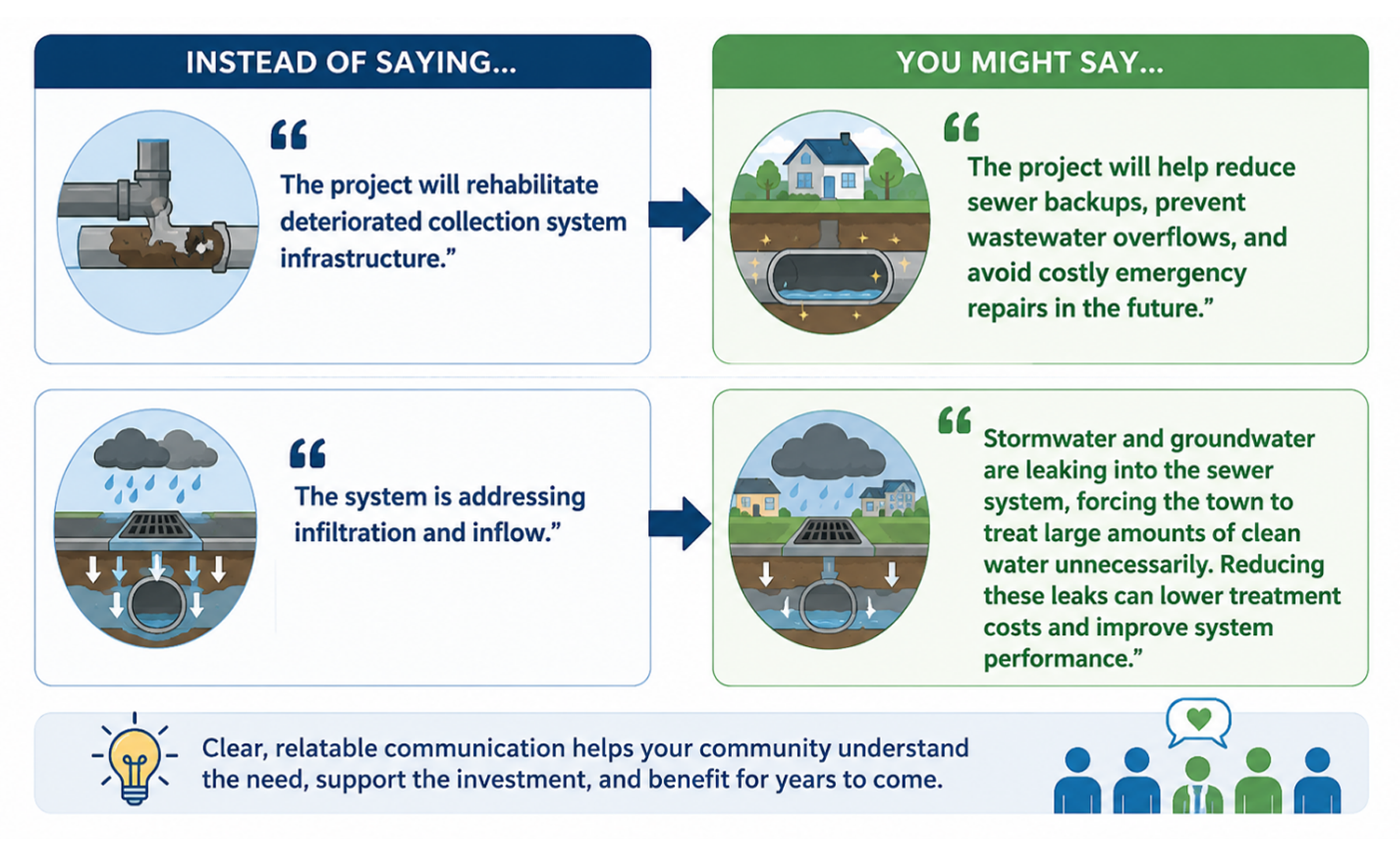
1. Explain the “Why” in Plain Language
Wastewater infrastructure is often underground and out of sight, which can make it difficult for customers to understand why improvements are necessary. Instead of focusing only on technical terminology, explain:
- The long-term financial benefits of proactive repairs
- What problem currently exists
- What could happen if nothing is done
- How the project protects public health and the environment
- How the project improves reliability and reduces emergencies
2. Use Multiple Communication Methods
Not everyone gets information the same way. Small systems can use several low-cost communication approaches to reach customers and build support.
Examples include:
- Including a short “Project Update” section in monthly utility bills
- Explaining the “why” for the project at community events, on the local radio, or in the local newspaper
- Holding a “meet your operator” event or facility tour
- Posting before-and-after photos of sewer repairs or equipment upgrades
- Creating simple maps showing where construction will occur
- Sharing videos explaining how the wastewater system works
- Providing construction schedules and traffic impact updates on flyers posted at local businesses or community centers
Utilities looking for communication templates and outreach resources may find the following resources helpful:
- Virginia Health Catalyst’s Water Quality Communications Toolkit
- EPA Public Outreach for Integrated Wastewater and Stormwater Planning
- NYS Wastewater Surveillance CoE’s Communications Toolkit
- EPA Communication Resources for Small Drinking Water Systems
- EPA Water Utility Public Awareness Kit
- Junction Coalition and Water Hub’s Water Utility-Community Guide for Communications
- Pacific Institute’s Water Rates: Communication and Education
3. Listen to Community Concerns
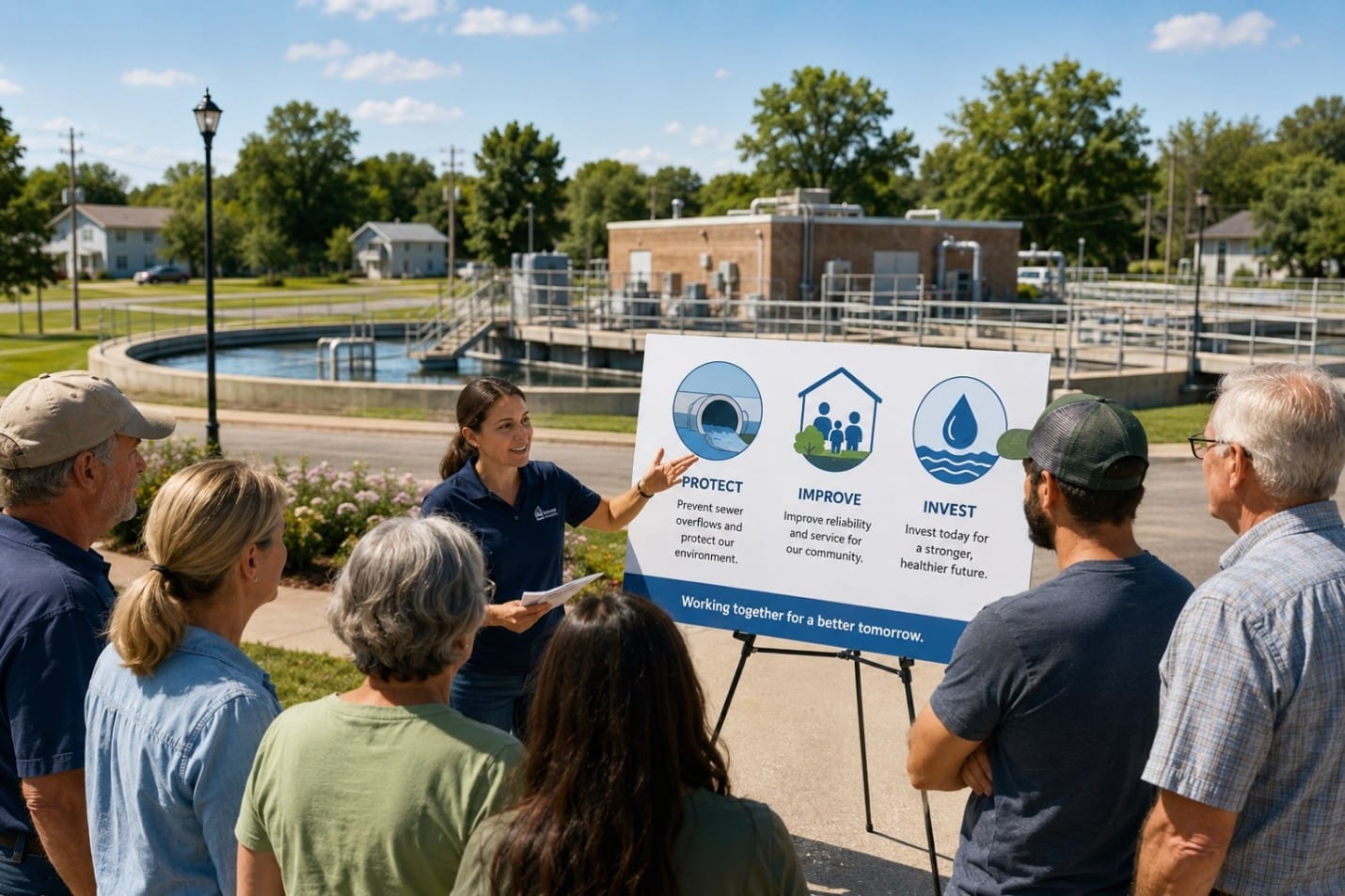
Community engagement is not just about providing information, it is also about listening. Customers may raise concerns about affordability, construction impacts, environmental issues, or project priorities. Some concerns may reveal issues the utility had not fully considered.
Listening respectfully and responding honestly helps strengthen credibility, even when difficult conversations are necessary. If affordability is a concern, utilities can discuss:
- Phased rate increases
- Customer assistance programs
- Grant funding opportunities
- Long-term financial benefits of acting now instead of waiting
Community support is often strengthened when trusted local leaders and organizations are involved. Utilities may benefit from engaging:
- Local elected officials
- Tribal leadership
- Community organizations
- Schools
- Emergency management staff
- Economic development groups
- Local businesses
By engaging early, communicating clearly, listening to concerns, and maintaining transparency throughout the process, small wastewater systems can improve project outcomes and strengthen relationships with the communities they serve.