
Small water systems are the backbone of safe and reliable drinking water for millions of Americans, particularly in rural and underserved communities. Yet behind the infrastructure lies a growing concern: the sustainability of the workforce needed to operate, maintain, and modernize these systems. As experienced operators retire and fewer young professionals enter the field, small systems face a workforce gap that threatens long-term resilience. However, alongside these challenges lies significant potential, supported by emerging initiatives, training programs, and federal investments designed to strengthen and diversify the water workforce.1
The Workforce Challenge
One of the most pressing issues for small water systems is an aging workforce. A significant percentage of current operators are nearing retirement age, creating an urgent need for succession planning.1 Small systems often struggle to compete with larger utilities that offer higher wages, stronger benefits, and more defined career advancement pathways.2 Limited staffing also makes it difficult to allocate time for training or mentoring new employees.
Geographic isolation further complicates recruitment efforts. Many rural systems lack access to nearby technical schools or training centers, reducing the pool of qualified candidates.2 Additionally, certification requirements—while essential for protecting public health—can pose barriers to entry if prospective workers lack financial or institutional support to complete them.3
Awareness is another persistent challenge. Many students and job seekers are unfamiliar with careers in the water sector, limiting the inflow of new talent.4 Without targeted outreach, small systems risk continued workforce shortages.
Untapped Potential in the Water Workforce
Despite these challenges, the water sector offers substantial opportunities. Water careers provide stable, mission-driven employment that is essential to community well-being and environmental protection.1 As infrastructure investments increase nationwide, demand for skilled workers is expected to grow, creating long-term job security.
There is also strong potential to diversify the workforce. Expanding outreach to underrepresented groups—including women, minorities, and rural populations—can help broaden the talent pipeline while strengthening community representation within the workforce.1
Technological advancements further expand opportunities. Increasing use of automation, data analytics, and remote monitoring systems is reshaping workforce needs, allowing small systems to attract individuals with varied skill sets, including IT and engineering backgrounds.5
Emerging Opportunities and Workforce Initiatives
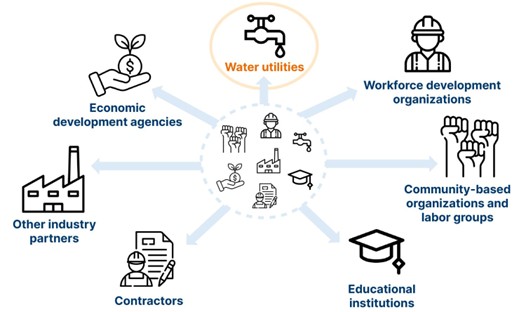
A wide range of initiatives at the federal, state, and organizational levels are addressing workforce challenges in small water systems.
The EPA’s Water Sector Workforce Initiative provides a national framework to strengthen the workforce through partnerships, improved training, and expanded career awareness.1 Supporting this effort, EPA workforce case studies highlight successful strategies that utilities have implemented, offering replicable models for small systems.2
The Innovative Water Infrastructure Workforce Development Program is a key funding mechanism supporting workforce training. It provides grants for apprenticeships, career pathway development, and partnerships between utilities and educational institutions.6 Recent awards include projects led by universities and workforce organizations aimed at enhancing local training capacity and building sustainable workforce pipelines.7
Apprenticeship programs, such as those offered by the National Rural Water Association, are particularly effective for small systems. These programs combine hands-on experience with classroom instruction, allowing participants to earn while they learn and reducing barriers to entry.8
Educational institutions are also playing a growing role. Partnerships with universities and community colleges are helping align curriculum with industry needs and prepare job-ready graduates.7
Professional organizations provide additional support through competency frameworks and leadership development programs. The Water and Wastewater Competency Model outlines essential skills for various roles, helping utilities structure training and career pathways.5 Career awareness platforms such as Work for Water promote water careers to a broader audience.4 Leadership initiatives, including young professional summits and leadership institutes, help cultivate the next generation of industry leaders.9,10
At the state level, certification and training programs are critical. Programs such as operator certification initiatives and operator-in-training pathways provide structured entry points into the profession, enabling individuals to gain experience while working toward full certification.3,11
A Path Forward
To fully leverage these opportunities, small water systems must adopt proactive workforce strategies. Building partnerships with local high schools, community colleges, and workforce organizations can create sustainable talent pipelines. Mentorship programs and cross-training can ensure knowledge transfer from experienced operators to new hires.
Outreach efforts are equally important. Engaging with students and community members can raise awareness about water careers and highlight their importance to public health and environmental sustainability.4
Finally, small systems should take advantage of available funding and technical assistance programs. Many current initiatives are specifically designed to support smaller utilities, offering a timely opportunity to strengthen workforce capacity.6
Conclusion
The workforce challenges facing small water systems are significant but manageable. With strategic investments, innovative training models, and expanded outreach, the sector can build a resilient and inclusive workforce. By embracing these opportunities, small water systems can ensure reliable service today while preparing for the demands of tomorrow.
References
- U.S. Environmental Protection Agency (EPA). America’s Water Sector Workforce Initiative. https://www.epa.gov/sites/default/files/2020-11/documents/americas_water_sector_workforce_initative_final.pdf
- U.S. EPA. Water Workforce Case Study Compendium. https://www.epa.gov/sites/default/files/2021-01/documents/wf_case_study_compendium.pdf
- New Mexico Environment Department. Utility Operator Certification Program. https://www.env.nm.gov/drinking_water/utility-operator-certification-program/
- Work for Water. Careers in Water. https://www.workforwater.org/careers-in-water/
- American Water Works Association. Water and Wastewater Competency Model. https://www.careeronestop.org/competencymodel/competency-models/water-sector.aspx
- U.S. EPA. Innovative Water Infrastructure Workforce Development Program. https://www.epa.gov/sustainable-water-infrastructure/innovative-water-infrastructure-workforce-development-program
- University of New Mexico. EPA Investment to Enhance Water Workforce. https://news.unm.edu/news/unm-part-of-epa-investment-to-enhance-water-workforce
- National Rural Water Association. Apprenticeship Program. https://nrwa.org/apprenticeship-program/
- American Water Works Association. Young Professionals Summit. https://www.awwa.org/event/young-professionals-summit/
- Water Environment Federation. Water Leadership Institute. https://www.wef.org/events–education/career-resources/Water-Leadership-Institute/
- Illinois Section AWWA. Operator in Training Program. https://www.isawwa.org/page/OperatorInTraining
- Joseph W. Kane and Anthony F. Pipa, “Rethinking Regionalization: Water Utilities as Economic Development Partners,” Brookings Institution, July 8, 2025, https://www.brookings.edu/articles/rethinking-regionalization-water-utilities-as-economic-development-partners/