
This past January I had the opportunity to present at a conference in Hilton Head, South Carolina. What was supposed to be an easy trip to a beautiful destination proved to be a trickier expedition for some of the registrants. Weather reports the preceding week predicted ice and snow with impossible road conditions along with major flight cancellations across the continental states. I was told that due to the weather, nearly half of all registrants were unable to attend.
Weather forecasts are interesting. Every morning my son uses the forecast to determine if he will wear a coat or just a sweatshirt. But when looking at traveling, the response to the same type of weather can be handled differently. For example, when it snows 6 plus inches in Utah, it’s time to grab your skis. When it snows 6 plus inches in Kansas, it’s time to look at closing the schools down. Without realizing it, we base our short term and long-term choices on the weather.
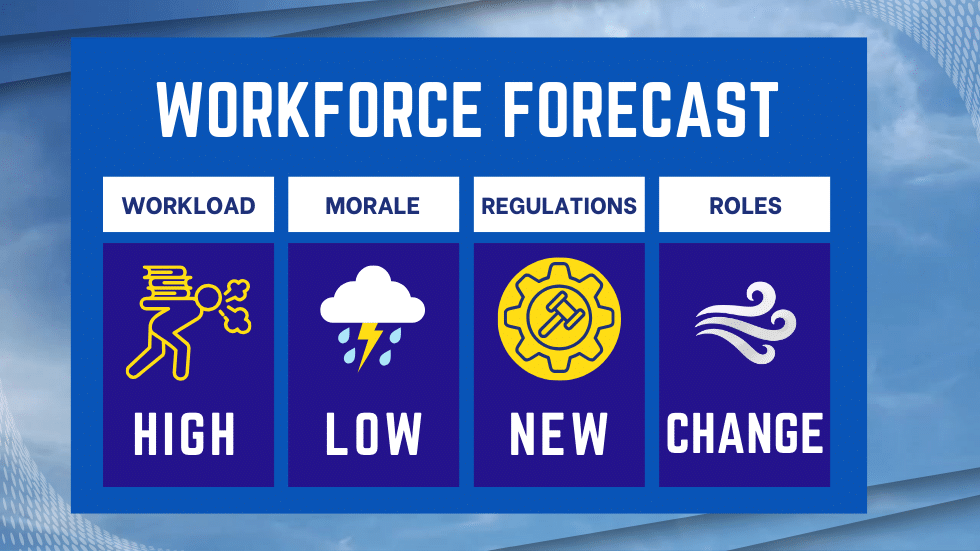
Forecasting isn’t just essential to knowing what to wear and when to travel. When it comes to the wastewater workforce, forecasting can help utilities anticipate how the decisions they make today will affect the choices they have in the future. Just like when we use the weather forecast daily; forecasting wastewater workforce development can help us look ahead, anticipate risks, and act before problems occur.
When looking at the current and future needs of your wastewater workforce, consider the following:
- Current and Future Skill requirements: What technical competencies will be required in 3-10 years? Are there skills gaps?
- Talent Pipeline considerations: Where to find interns, apprentices, and how to move operators into management?
- Staff workload: How is the staff doing now and what will this look like in the future? Is there burnout? Will roles evolve?
There are many things a utility can review to generate an understanding of what can be decided in the present and what needs to be future focused. With forecasting, you do not have to skip a plan to take an action.
Despite the major storm that swept the country, I was able to safely navigate to Hilton Head and experience an amazing conference. My presentation and everything that I needed did not have to change because of the weather. I was able to have a successful trip. My colleague from New York also arrived. Because of her careful planning, she was able to find flights and transportation that would allow her to arrive safely as well. Since we both reviewed the forecast and kept in communication, we each fulfilled our goals for this trip.
We all know we cannot control the future, but we can prepare for it. We didn’t have to skip our plans and act without any forethought. Well-explained weather forecasts save time, money, and lives. For wastewater utilities, workforce forecasting can translate to less emergency staffing situations, smoother compliance, and better employee retention through a stable workplace.