
As many of us have noticed, the cost of energy continues to rise. Several factors are driving this increase, including the rapid expansion of data centers to support AI technologies and aging utility infrastructure. For wastewater systems, these trends matter a great deal.
According to the EPA, wastewater treatment plants (WWTPs) are among the largest energy consumers in municipalities, accounting for 30–40% of total municipal energy use. Combined, wastewater and drinking water systems make up roughly 2% of all energy consumption in the U.S. This heavy energy demand represents about 40% of municipal operating budgets and contributes approximately 45 million tons of greenhouse gas emissions each year.
The good news is that energy management strategies and efficiency improvements can reduce these costs by 15–30%, offering both financial and environmental benefits.
Where the Energy Goes
Energy savings are possible across the water sector, but wastewater systems offer the greatest opportunities due to the number of energy-intensive processes involved. The biggest energy consumers in WWTPs typically include:
- Aeration
- Pumping
- Solids handling
- Lighting and HVAC
These costs are often accepted as “just the cost of doing business,” but small operational adjustments and smart investments can significantly reduce energy use.
Where to Start: Understanding Your Energy Use
The first step in energy management is understanding your energy bill and how your assets consume electricity. Wastewater facilities primarily use electricity, and electrical bills provide key information such as:
- Meter readings (overall usage)
- Consumption charges (cost of electricity used)
- Demand charges (costs associated with peak usage and grid strain)
- Additional utility-specific fees and detail
This information helps establish a baseline and identify how timing and operational patterns influence costs.
Next, estimating the energy usage of individual assets is essential. To do this, operators need:
- Power output (found on equipment nameplates in horsepower or kilowatts)
- Run hours (from software, logs, or operator knowledge)
Multiplying run hours by power output (in kW) and converting from horsepower to kilowatts using a conversion factor if needed, gives energy usage in kilowatt-hours. Comparing asset-level usage to total plant consumption highlights where the biggest savings opportunities lie.
Energy Conservation Strategies
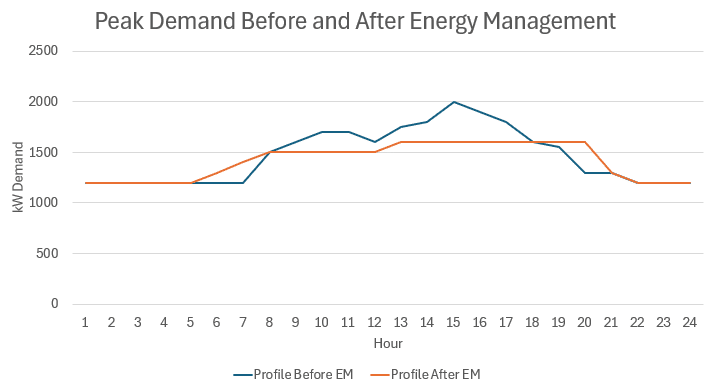
Once you understand where energy is going, you can apply proven strategies such as load shifting and load shedding.
Load Shifting
Move energy-intensive operations to off-peak hours.
Common applications include:
- Aeration timing
- Pumping schedules
- Thermal processes
This works best for systems with flexible operations or sufficient storage capacity.
Load Shedding
Reduce or turn off nonessential equipment during peak hours.
Examples include:
- Shutting down extra blowers or pumps
- Turning off HVAC and lighting in unoccupied areas
Even small actions can contribute meaningfully to overall savings.
Energy Efficient Technology
Use technology to support both conservation and optimization:
- Automated controls that adjust blowers or pumps based on flow
- Occupancy sensors and smart thermostats
- Variable frequency drives (VFDs) that modulate motor speeds
These tools can be excellent investments, but they are not one-size-fits-all. Each system should evaluate the benefits and limitations before implementation.
Energy Production Opportunities
Wastewater facilities can also generate energy. Many plants produce sludge that can be anaerobically digested to create biogas, which can be used as fuel for heat or electricity. This not only supports sustainability but also stabilizes sludge and improves solids handling.
Additionally, many WWTPs are located in rural or semi-rural areas with available land—ideal for solar or wind installations. While not every plant will have the right conditions, these options are becoming more feasible as technologies improve.
Energy Management Frameworks
A comprehensive energy management framework helps embed energy efficiency into everyday operations. These frameworks typically include:
- Benchmarking current energy use
- Developing system-wide energy policies
- Implementing improvements
- Continuously monitoring and refining performance
The Southwest Environmental Finance Center (SWEFC) often recommends resources from the New York State Energy Research and Development Authority (NYSERDA) and the EPA’s Energy Efficiency for Water Utilities program.
Partnering for Success
While systems can pursue energy management independently, many benefit from partnering with organizations experienced in benchmarking, strategy development, and technology implementation. The Environmental Finance Center has extensive experience supporting utilities through this process.
If this overview has sparked your interest and your system would like to explore technical assistance for energy management, you can submit a request here.