
When Shannon Hazelton entered the workforce, he never expected to spend nearly twenty years in wastewater. Yet his path—shaped by unexpected opportunities, tough environments, and a drive to keep learning—reflects the reality of many who serve in this essential field.
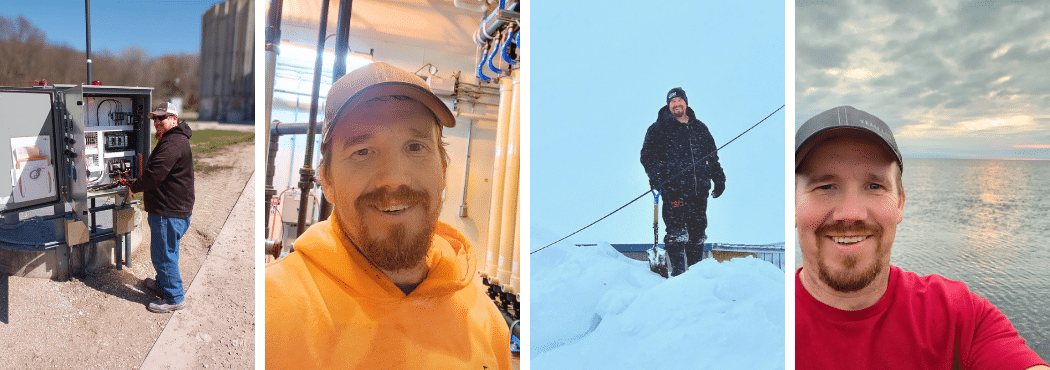
Shannon’s wastewater journey began almost by accident. After long weeks laying pipe for a utility contractor, he moved on to work for the city of Des Moines, IA working in their streets department. Looking for better benefits, he took the first fulltime job he could get, a sewer position with the City of Des Moines in 2010. Over seven years, he advanced to pump station technician at Iowa’s largest plant. But despite the department’s layers of leadership, advancement fell out of reach. “If there would have been a path to leadership, I would have stayed,” he recalls.
His next chapter took him to Ida Grove, a community of fewer than 2,000 residents. Small systems offered more responsibility but also exposed the growing strain on rural utilities. Small systems often function somewhere between two extremes. Shannon observed that they either have operators who have been there for 20 plus years, or they have high turnover because some operators find better paying positions at larger systems.
His understanding of the value of a good operator became even clearer during his time running an indoor activated sludge plant in Point Hope, Alaska. From thawing frozen sewer lines to planning months ahead for replacement parts, the challenges were transformative. These experiences sparked his passion for training, mentoring, and helping others enter the field better prepared than he once was.
Across every role, Shannon leaned on the traits he believes define strong wastewater professionals: curiosity, independence, and a willingness to embrace new technology. These qualities carried him through demanding jobs and now fuel his commitment to strengthening the workforce pipeline.
Shannon didn’t set out to build a career in wastewater, but his experience now fuels his mission: helping the next generation enter the field with confidence, clarity, and purpose. His journey proves that the lessons of the past can—and should—shape the future of the wastewater workforce.
Currently, Shannon focuses much of his time reaching out to students and educators across his home state of Iowa to share his passion for this undervalued career. With pride, Shannon connects the students and educators with local utility leaders to create public understanding and an awareness of the operator profession. He hopes that more students will be able to take a more direct route into the wastewater workforce.